
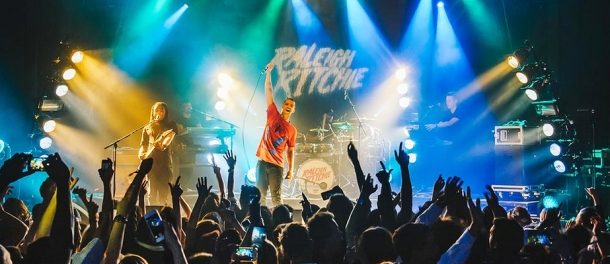
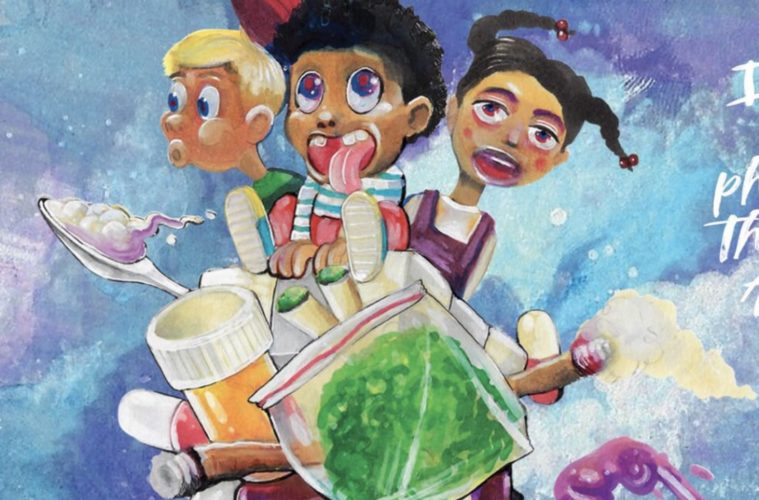

Drugs and Rockstars. The two have seemingly been an inseparable couplet for decades. With today’s ‘Rockstars’ appearing to be the mainstream rappers and Hip-Hop artists, is there a growing issue within the genre in regards to the societal pressure it is creating to take illegal substances?
An incredible amount of the top charted music within this genre features mention of drug abuse, among other illegal activities. It has become so prevalent that it appears as though having these subjects within the music is a staple of the genre itself. This is, in part, true. The origin of rap music may be traced back to African tradition. Rap music has been said to be a part of the ‘Black rhetorical continuum’ by Baruti N. Kopano within ‘Rap Music as an Extension of the Black Rhetorical Tradition: “Keepin’ It Real”‘. The relevance of this information is massive; the mention of drugs and feature of ‘Drug Culture’ within early rap is a result of it being a basic reality of life for the majority of musicians creating rap and hip-hop.
The issue of drug addiction and distribution has been a massive societal concern for the Black community in recent history. This is a consequence of drug abuse being far more likely in lower socio-economic classes, and as a result of the societal prejudice and bias within modern history, people of African descent have oftentimes been forced and pushed down into a lower class, particularly in the United States where rap and hip-hop themselves are also based. As a result of all of this, it is easy to appreciate why drug culture was present within early rap and hip-hop, and also even very understandable why for many artists it is still present within their music; prolific rappers such as J-Cole and Kendrick Lamar having had immediate experience in their lifetimes with the danger and harm of drugs.
However, the main concern that I and many other people observing this subject have, is the rise of artists who appear to be utilising these themes as a tool to propel themselves into popularity regardless of how authentic their lyrics may be to their true experience. One major suspected perpetrator of this trend is ‘Lil Pump’, real name Gazzy Garcia. Garcia is just 18, yet has already faced numerous charges related to firearms and drugs. The main criticism of Garcia in relation to this debate is that he undoubtedly furthers the upcoming societal narrative that drugs are ‘cool’ and ‘fashionable’ with his music. This would not be so much of an issue if he were a lesser known artist, but Garcia is enormous; topping charts, and being listed by Forbes as one of their ’30 under 30′.
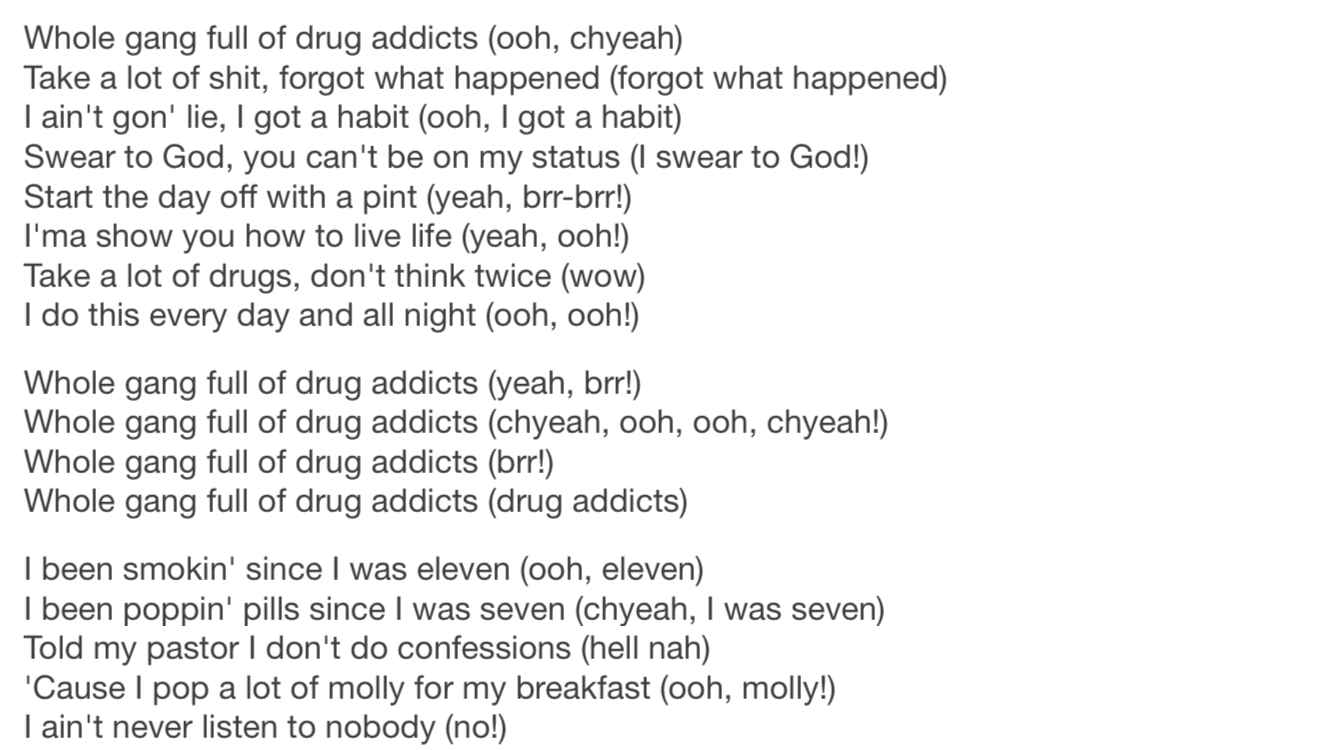
It may be argued that by leaning heavily on these themes to sell his music Garcia is actually appropriating a culture that he does not belong to. I would be inclined to disagree; Garcia most certainly does have his own issues with drug abuse, as seen by his criminal record, making it clear that it at least somewhat is being directly written from his experience. However, what I believe is his wrongdoing, is the promotion and celebration of this. Not once has he ever publicly acknowledged that his criminal offences are an issue or problem and instead celebrates partaking in illegal activity. While I am fully appreciative of musicians having free creative license to discuss their reality and experience within their music, I believe that there should be some sense of accountability and responsibility upheld.
One example of a musician who portrayed that sense of accountability and responsibility both within the public eye and their music was Malcolm McCormick, known in the industry as ‘Mac Miller’. Mac spoke frequently within his lyrics about his experience with drug abuse, creating vulnerable undertones within his songs that resonated with the concerns he raised in interviews regarding his drug use. Mac’s addiction proved fatal, with him passing away from an overdose in September 2018. The overdose is believed to have been accidental.
As aforementioned, Mac is an excellent examples of an artist both utilising his experience to better his music but also portraying awareness and accountability, having said “I’d rather be the corny white rapper than the drugged out mess who can’t even get out of his house. Overdosing is just not cool. There’s no legendary romance, you don’t go down in history because you overdosed. You just die.” This directly relates to the concern that many rappers are glorifying drug abuse and usage in an attempt to gain recognition and fame – something Mac himself was against, essentially stating he would rather be irrelevant and unknown in the music scene than discuss drug usage to achieve notoriety, in a ‘Lil Pump’ fashion. Mac, being a grammy nominated artist, is proof that you can both be honest and vulnerable in your lyrics while also being socially aware of the impact you are having on consumers of your art. In a genre in which the majority of artists seem to include illegal activity in their lyrics whimsically and for relevance, there is certainly a lesson to be taken from the way which Mac went about maintaining integrity to himself in his music, and also achieving success.
 JCM
JCM 